
(Dieser Inhalt ist zurzeit leider nur auf Englisch verfügbar. Hier finden Sie eine automatisch generierte Übersetzung, welche jedoch sowohl sprachliche als auch inhaltliche Fehler enthält.)
lb. In 2014, when a student of mine first pointed out to me that there were objects from the Philippines kept at the Zurich Ethnographic Museum (V?MZ*), my curiosity was not primarily aroused by a scientific interest (in the objects or their history). I suppose I simply felt a sense of affiliation. After all, I am a resident of Zurich myself, but it was my parents who chose this place to be my home (instead of the Philippines). Somehow, I therefore imagined that those objects and I had something in common.
There were multiple obstacles that stood in between the objects and me, however. First of all, the Philippines was not a top priority for the museum (as a field/region of study), which meant that their time and resources were reserved for objects from other parts of the world. What is more, the objects were safely stowed away and hardly accessible even to museum staff.
While my initial hopes to see the objects were crushed, and my dream to one day visit the V?MZ and find them exhibited there was tabled, thanks to developments in museology on the one hand, and through a few serendipitous personal connections on the other (find out more about our association’s engagement with the V?MZ and other museums), I’ve been inching my way closer to my original vision with the help of my colleagues at studiyo filipino.
Combining our strengths and interests with the expertise found in our larger networks, and having been granted access to at least the museum’s digital archive, we uncovered what these objects might be able to tell us about Switzerland’s trading history and the role that colonies played in it. And this calls into question the museum’s position as well.
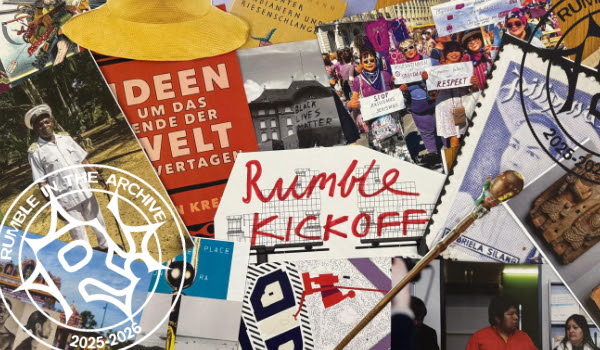
For us at studiyo filipino, the joint KICK-OFF party** on 5 December 2025 will mark the start of our residency at the V?MZ that will last until September of 2026. Within this period, the public is invited to not only view the few objects we get to display in the exhibit, they can also learn about their history and significance for the city of Zurich as we know it today. Moreover, friends and affiliates of studiyo filipino are invited to share and occupy the space with us and our co-residents! Who knows, it might become the birthplace of new and pivotal ideas!
For me personally, it will be a celebration of another milestone on this rewarding – though at times challenging – journey, which has taught me many things about museums and beyond. Among them, I am reminded that going to museums like the V?MZ is not just about marveling at objects from faraway places. It is about better understanding the many layers in the history of our interconnected world which have led to exactly this moment, where I and the objects are face to face.
Meet you in the museum!
Yours truly,
Lenny (co-founder of studiyo filipino)
*short for «Völkerkunde?museum Zürich» – the ? represents the museum’s ongoing search for a more appropriate name
**main image by Rohit Jain, design by V?MZ
